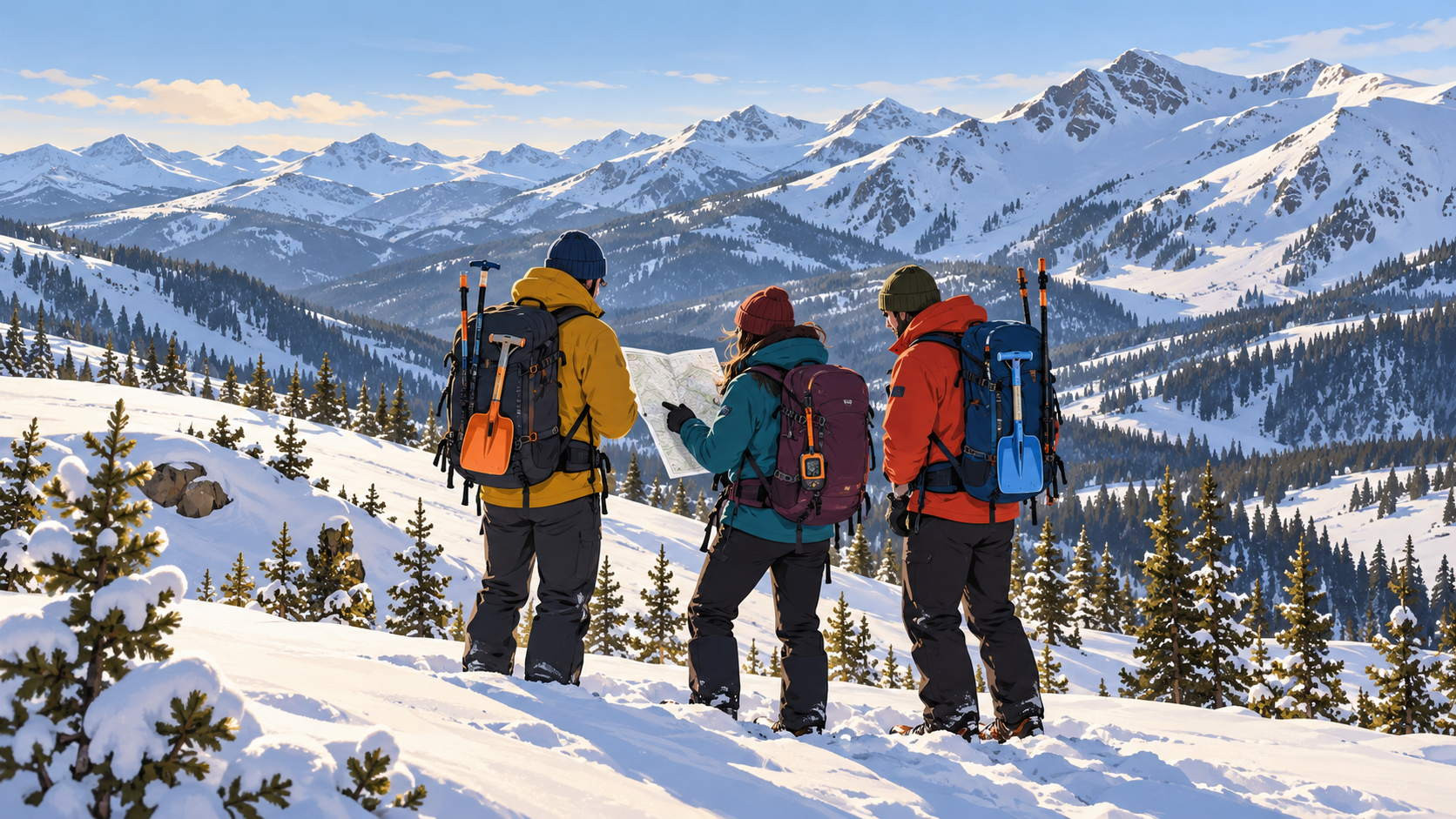
The first snow on a familiar trail can make a winter outing feel close. Before heading into the backcountry near Vail Pass or elsewhere in the valley, make the plan about conditions and terrain—not just the destination.
The Colorado Avalanche Information Center (CAIC) publishes avalanche and mountain-weather information for people traveling in snow-covered Colorado mountains. Its Vail and Summit County forecast area covers the local mountain region. Conditions change, so a forecast read days ago is not a substitute for checking again before leaving.
Start with the forecast and the route
CAIC says to check its avalanche forecast while planning a trip and again before heading out. Read beyond the headline danger rating: note where the described problems occur and whether your proposed route enters that terrain. If current information is limited, treat that uncertainty as part of the decision rather than an all-clear.
A simpler outing away from avalanche terrain may be the right choice for a group that has not yet trained or practiced together. Skiing, snowshoeing and snowmobiling can all take people into hazardous terrain; travel mode does not remove the need to assess it.
Take a first lesson before the first trip
CAIC’s free Avalanche Aware eLearning course introduces how to recognize and manage avalanche risk. The agency also points to local awareness events and more comprehensive courses. An online introduction is a starting point, not a replacement for hands-on training or practiced rescue skills.
CAIC’s preparation resources include videos on essential rescue equipment, practicing rescue, and checking a group’s gear before leaving a trailhead. Build time for those steps into the trip plan. Make sure companions know the route, the decision points and the return plan.
Know where to find the local information
Use the CAIC forecast page to look up the relevant area and current information. The agency identifies Vail and Summit County as a forecast area in its regional recordings. Check the latest forecast and weather close to departure, and be ready to change or cancel the route.
Snow on the ground is the cue to start asking avalanche questions. A careful plan now gives your group better choices when winter arrives.
Featured image: AI-generated editorial illustration, not a depiction of current Vail Pass conditions.
Safety information checked Oct. 21, 2026. This article does not describe current slope conditions or replace a forecast or training.
