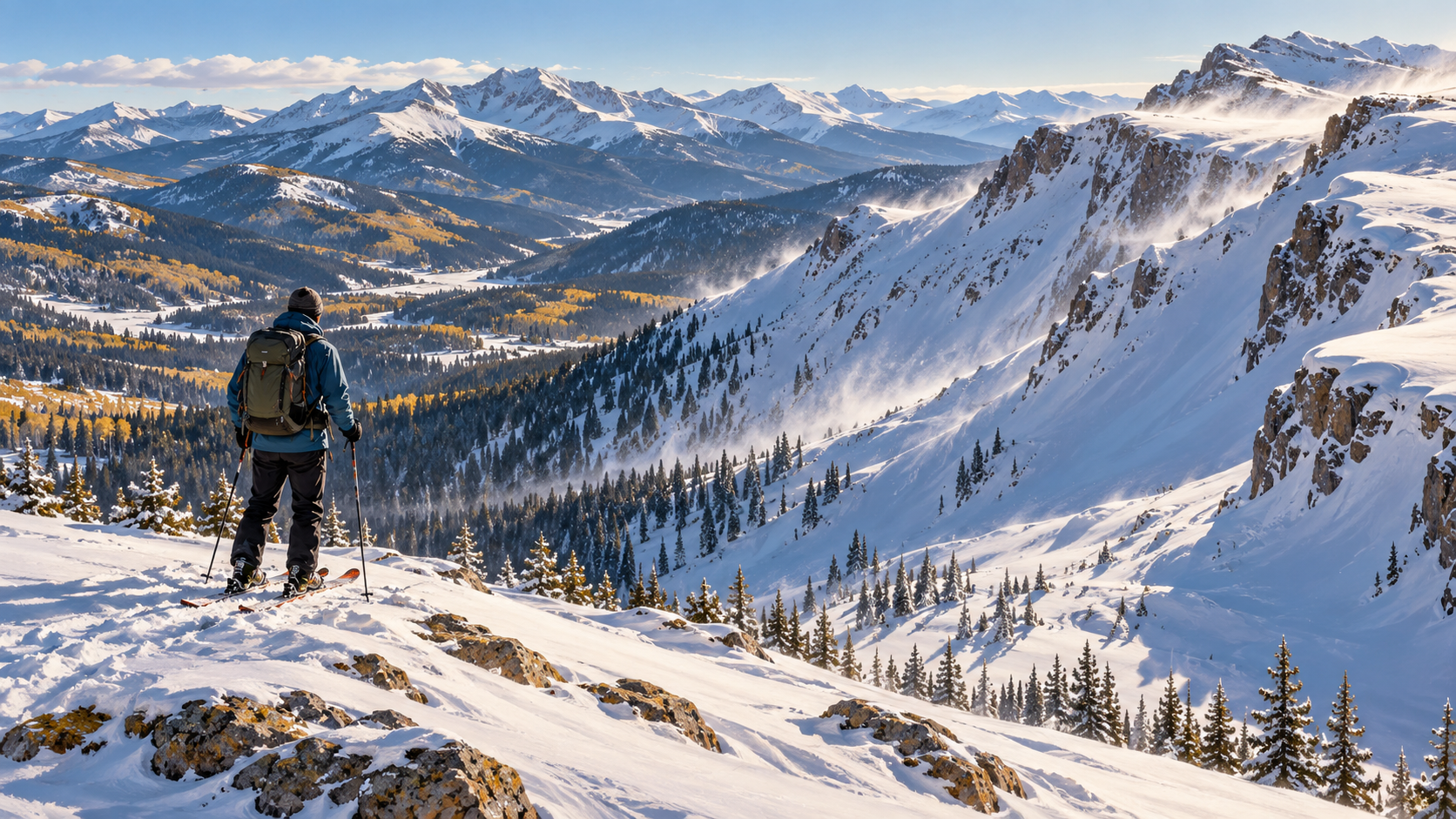
Colorado’s early-season avalanche warning is a reminder that a thin snowpack can still move on a steep slope. The Colorado Avalanche Information Center (CAIC) cautioned this week that hazards are developing as a storm moves through the mountains.
This is a new conditions update for people heading into the high country. It does not mean every slope has the same danger, and it is not a substitute for checking the latest information for your route.
Why early-season snow deserves attention
CAIC’s forecast site says avalanches can occur whenever snow covers a steep slope. In an Oct. 22 update reported by Powder, forecasters flagged developing hazards on steep, snow-covered terrain. Rain on existing snow can loosen it. Colder weather and wind can then build drifts that behave differently from the thin cover nearby.
Small slides also matter. Early in the season, rocks, logs and bare ground may lie just below the surface. A short ride can cause a serious fall or carry a person into exposed hazards.
What to check before a high-country trip
First, open the current CAIC map and alerts for the area you plan to visit. Check again on the morning of your trip because storms and wind can change conditions quickly.
Next, look at your route, not only the trailhead. Would it cross a steep snow-covered slope or pass below one? CAIC’s basic safety guidance lists recent avalanches, shooting cracks and collapsing snow as warning signs. If you see them, choose lower-angle terrain or turn around.
Finally, match the plan to your group’s skills and equipment. A sparse early-season forecast is not an all-clear. If you cannot evaluate avalanche terrain, stay away from it.
How this differs from a resort opening
A resort’s open runs receive patrol work and controls. Nearby backcountry does not become safe when a lift starts spinning. Our earlier Vail-area avalanche planning guide covers the trip basics; this update is the reason to revisit that plan after new snow.
Conditions can change by elevation, aspect and hour. Check CAIC’s current information immediately before travel.
