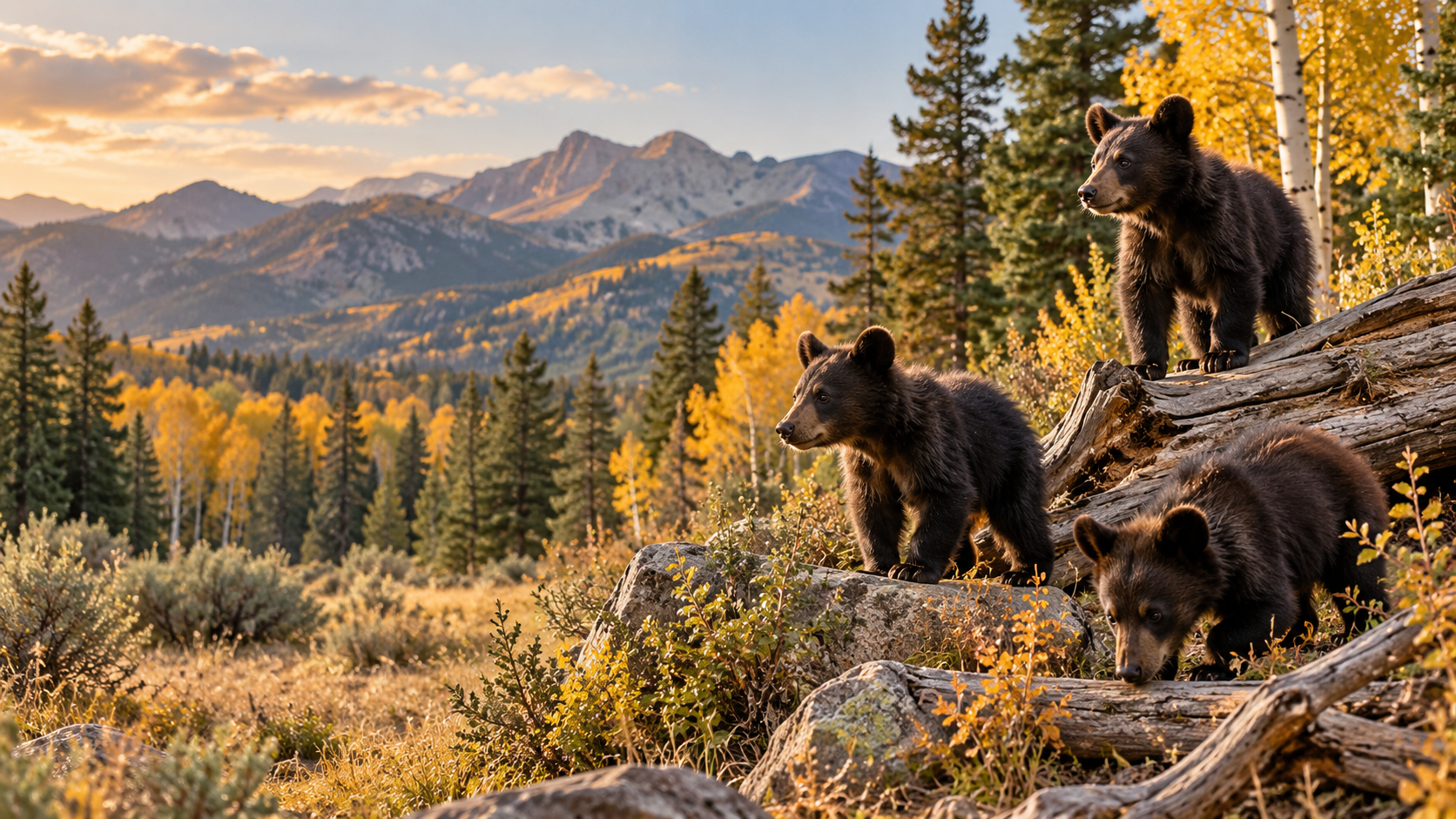
Silt bear cubs are arriving at a wildlife rehabilitation center in unusually high numbers this year. By mid-October, the center cared for 32 cubs. It had just three at the same point last year. Some arrived from Eagle and other Western Slope communities, according to The Colorado Sun’s reporting from the Pauline S. Schneegas Wildlife Foundation.
That increase raises a practical question for Eagle County residents: If you spot a cub alone, does it need help?
A cub alone is not always orphaned
Colorado Parks and Wildlife advises people to watch young wildlife from a safe distance and leave it alone. A mother may be nearby but out of sight. Approaching a cub could put you and the animal at risk.
The Silt center’s director, Nanci Limbach, told The Colorado Sun that an autumn cub without its mother may already survive independently. Wildlife officers bring cubs to the center when they find them injured, orphaned or too underweight for winter. Only Colorado Parks and Wildlife officers bring bears to the facility.
Why the Silt bear cubs need care
Limbach partly attributed this year’s influx to a spring freeze that reduced fruit and other bear food. Summer drought followed. Some cubs also lost their mothers to vehicle collisions or human actions. Those observations describe the cubs arriving at this center. They do not explain every bear encounter across Colorado.
Caring for the animals takes substantial food. Limbach told The Colorado Sun the cubs ate about 2,000 pounds of fruit and 1,000 pounds of dog food each week. The center aims to build their weight while preserving the wild behavior they need for release.
What to do near home
Do not feed or approach a bear. Secure trash, pet food and other attractants. If a bear stays in your neighborhood, contact a local Colorado Parks and Wildlife office. Do the same if you suspect a cub is injured. Do not try to handle it yourself. CPW’s home wildlife guidance explains when to report a bear that will not leave.
Readers can learn about supporting the center through the Pauline S. Schneegas Wildlife Foundation. At home, give bears space and remove easy food sources.
