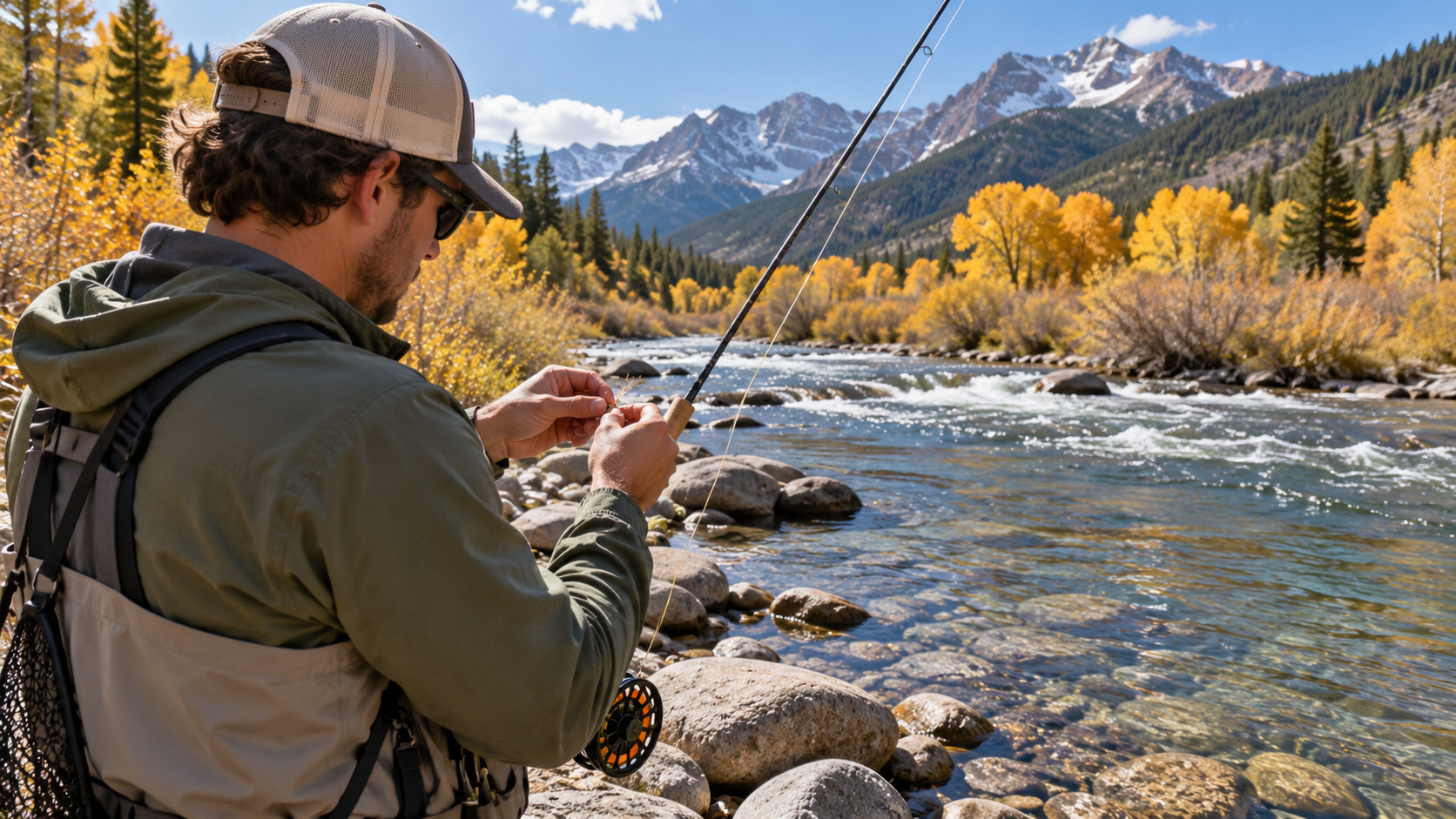
Want to try nymphing on the Eagle River but unsure where to start? This beginner method puts a small imitation of an underwater insect where trout often feed. You do not need a complicated setup to learn the first steps.
Colorado Parks and Wildlife’s fly-fishing guide describes a 9-foot, 5-weight rod and weight-forward floating line as a versatile starting point. It also lists nymph patterns among common flies. If you are borrowing gear or visiting a fly shop, tell the staff you are a beginner and where you plan to fish.
A simple beginner nymphing approach
Start where you can stand safely and make a short, controlled cast upstream or across the current. Watch the fly line or a small strike indicator as the fly drifts downstream. If it pauses or moves unnaturally, lift the rod gently. Keep your first sessions focused on making a natural drift rather than casting farther.
Change one thing at a time when you are not getting a useful drift: where you cast, how much line lies on the water or the depth of the fly. A local guide or shop can help match flies and equipment to current conditions. Avoid wading beyond your footing or entering swift water to reach a promising seam.
Where can you fish legally?
The CPW Eagle River page identifies public-access areas and water-specific rules. Do not assume every attractive bank is open to the public. Confirm the access point, property boundary and current regulations before casting. Some stretches have special limits. Our Avon guide points to Eagle River and Eagle Valley Trail access in town, but check local signs and CPW rules on site.
Anglers age 16 or older need a Colorado fishing license. CPW also maintains the current fishing brochure; check its rules for the exact water you choose. Access at a state wildlife area may carry separate requirements.
What to bring for a first outing
- A valid license, the current rules and a map of your chosen public access point.
- Basic fly gear, a few nymphs and polarized glasses to see the water.
- Footwear suited to slippery banks and changing weather.
- A plan to leave if flows, weather or footing are unsafe.
Nymphing takes practice. Make the goal of your first trip a safe, legal hour of learning. Catching a trout can come later. This guide uses CPW information checked Oct. 24, 2026; verify conditions and rules before you go.
Featured image: AI-generated editorial illustration, not a photograph of current Eagle River conditions.
